


The best glass for serving craft beer on tap depends on the beer and the qualities you want to highlight. A tulip-shaped glass helps gather the head and concentrate aroma, while a Pilsner glass shows off clarity, sparkle and rising bubbles. No single shape suits every style.
Glass choice is only part of the experience: pouring also affects the head and aroma. This guide compares common beer glass styles, explains how to pour smoothly and shows what a Pilsner glass reveals about carbonation. Use these practical tips to choose and serve craft beer with care.
Key Takeaways
- Choose a glass shape to suit the beer: tulip glasses help capture aroma, while tall Pilsner glasses make clarity and bubbles visible.
- Pour with the glass tilted, then straighten it near the end to build a head while limiting excess foam.
- Use a Pilsner glass to appreciate a beer’s sparkle, clarity and carbonation as you serve it.
- Match the glass to the occasion as well as the beer, whether you’re serving a tasting pour or choosing customised drinkware for an event.
1. What are the different types of beer glasses?
Glass shape affects how beer’s aroma reaches you, how its head forms and how it feels to drink. To find the best glass for serving craft beer on tap, match the shape to the beer rather than choosing by capacity alone. A straight-sided pint glass is versatile, while a wine glass can work if a dedicated beer glass isn’t available.
A tulip glass curves inward at the rim, helping gather the head and concentrate aroma. IPA glasses may have ridges to aerate hoppy beer, while a tapered bowl focuses hop aromas. A Teku glass’s stem keeps your hand’s warmth away from the beer and helps present its volatile aromas. A tall, sturdy glass leaves room for the generous head of a wheat beer. A Pilsner flute suits Pilsners and Belgian fruit ales, while a pint glass is commonly used for stouts.
Nucleation refers to tiny surface textures that encourage CO₂ to escape, helping sustain a beer’s head. A nucleated glass can suit beers best served with a lively stream of bubbles and a lasting head. It isn’t automatically better for every craft beer: the ideal head and aroma depend on the style.
For Australian trade service, distinguish a glass’s capacity from the volume of beer poured. The shape alone doesn’t determine the serving measure. Capacity also affects how much room is left for the head, so choose a vessel that suits the intended pour.
Australian breweries and bars can match glassware to beer style: tulips suit ales, while tall glasses suit wheat beers. Wash glasses thoroughly and serve them free of residue; chill them if you want a colder pour. For bar service, a heavy base adds stability, while the bulge on a Nonic pint helps protect the rim from chips. A mug’s handle also keeps your hand away from the beer.
2. Pouring beer into a glass
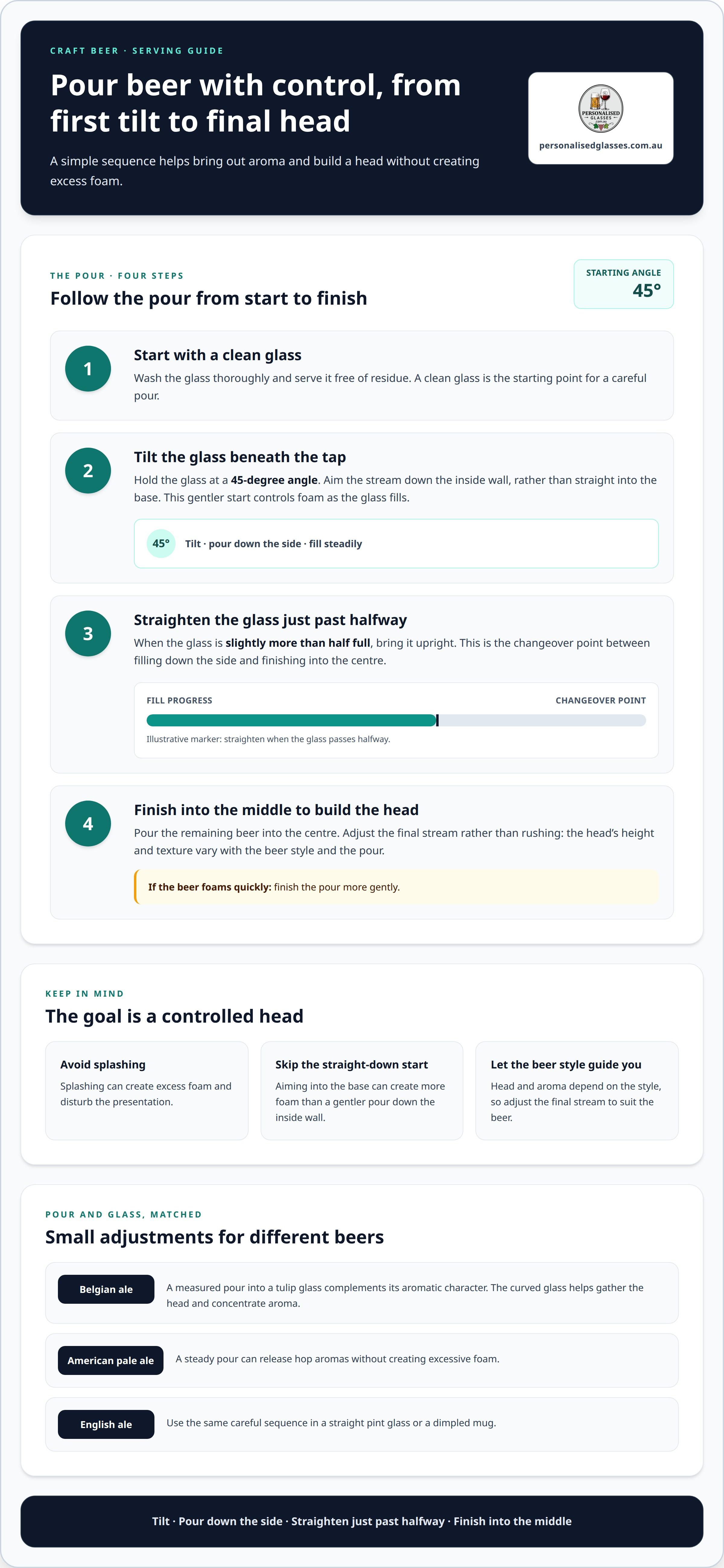
A careful pour brings out a beer’s aroma and helps form a stable head. Start with a clean glass, then hold it at a 45-degree angle beneath the tap. Aim the stream down the inside wall, rather than straight into the base. This gentler start controls foam while the glass fills. The same approach works when pouring from a bottle.
When the glass is slightly more than half full, bring it upright. Pour the remaining beer into the centre to build the head. Its height and texture vary with the beer style and pour, so adjust the final stream rather than rushing. A tulip glass, for example, gathers the head near its narrower rim and helps present the beer’s aroma.
For a Belgian ale, a measured pour into a tulip glass complements its aromatic character. An American pale ale can benefit from a steady pour that releases hop aromas without creating excessive foam. English ales can also be poured this way, whether served in a straight pint glass or a dimpled mug. If your beer foams quickly, finish the pour more gently.
For different types of beer, keep the sequence consistent: tilt, pour down the side, straighten after the glass passes halfway, then finish into the middle. Avoid splashing, which can create excess foam and disturb the presentation. A champagne-style pour is not the goal; the aim is a controlled head that complements the beer. If you’re planning a tap service for an event, plan your serving glassware around the beer styles you’ll pour.
3. Pilsner glasses and carbonation visibility
A Pilsner glass shows a beer’s sparkle, clarity and bubbles while helping retain its head. Its tall, slender profile gives a clear view from base to rim, making it easy to follow carbonation as bubbles rise. This visual detail can enhance the serving experience, especially with pale pilsners, where colour and clarity are part of the presentation.
Observe the glass after pouring. A steady stream of fine bubbles rising through the beer shows carbonation at work, while foam gathers at the top. The head helps hold aroma above the beer, and the narrow shape frames that visible layer. A vigorous pour may create more foam; a controlled pour can reveal delicate bubbles without obscuring the beer.
Glass shape can help distinguish beer styles. A Pilsner glass suits a bright, clear lager, while a tall German-style Weizen glass leaves room for a wheat beer’s head. Neither shape is essential for every pour, but each presents the beer differently. For a draught Pilsner, use a clean glass and pour steadily to appreciate its carbonation, clarity and head.
For bar service or an event, choose glassware that lets guests see the beer as well as hold it comfortably. A Pilsner glass gives a crisp visual presentation; a broader glass may suit other styles better. If you’re planning a branded serve, choose custom beer glasses that complement the way you want your draught beer presented.
Personalised Glasses Australia
Personalised Glasses Australia supplies customised drinkware for events, hospitality settings and branded occasions. Once you’ve decided how you want beer to look and feel when served, customised glassware can create a consistent finish. Options include Printed Beer Mugs, as well as Monogrammed Champagne Flute Glasses, Engraved Whisky Glasses and Printed Plastic Wine Glasses for other drinks and settings.
For a beer-focused event, consider the serving style first, then choose drinkware that suits the occasion and your guests. Personalised Glasses Australia provides nationwide delivery, and most orders are completed in approximately 14 days.
Contact Personalised Glasses Australia to discuss your drinkware requirements.
Plan a more considered beer service
Choosing the best glass for serving craft beer on tap is a starting point for thoughtful beer service. Consider how the glass fits the setting, how staff will pour and the impression you want to create. Consistent presentation can make a bar, event or gathering feel considered, while customised drinkware carries that look beyond the first round.
For a private celebration or hospitality event, plan the drinkware alongside the menu and service style. A clear brief helps shape the personalisation and makes the finished pieces feel connected to the occasion, rather than like an afterthought. Consider who will use the glasses and how they’ll fit the experience you’re creating.
Take the next step at your own pace. Contact Personalised Glasses Australia to discuss your drinkware plans and give every pour a consistent presentation.
Frequently Asked Questions
What are the different types of beer glasses?
Beyond the familiar pint and Pilsner shapes, beer glassware includes stanges, goblets, snifters and dimpled mugs. These offer choices for different settings, from a compact tasting pour to a traditional pub presentation. If you serve a varied beer list, plan glassware around the styles you pour most often and the experience you want each serving to create.
What glass shapes are best for serving different styles of craft beer on tap?
Match the glass to the beer and the occasion. Dimpled pint mugs suit English ales and bitters, while goblets are often used for Trappist ales. A standard pint glass is a practical choice for stouts. If you’re serving several styles at an event, these examples can help you plan simply without assigning a different glass to every beer.
How do tulip, pint, IPA, wheat beer and Pilsner glasses compare?
Beer glasses differ in shape and intended use. Tulip and IPA glasses are more style-specific, while a pint glass is versatile for general service. Wheat beer and Pilsner glasses have taller profiles. For a tasting, consider how each glass looks on the table, how easy it is to handle and whether one shape can serve more than one beer.
What glass size is standard for craft beer servings in Australia?
There isn’t one glass capacity that applies to every craft beer serving in Australia. A vessel’s total capacity and the volume poured into it are separate considerations. For a menu or event, make the serving volume clear and leave suitable room in the glass for the beer’s head. This helps guests understand what each pour represents.
Which beer glasses best preserve aroma, head and carbonation?
Choose a glass based on the qualities you want to prioritise. A stange can concentrate soft hop and malt aromas while preserving carbonation. For a beer where head retention matters, consider a glass designed to support it. At a tasting, use a clean, residue-free glass for each sample so leftover foam or beer doesn’t affect the next pour.